How to Launch a New SaaS Feature Successfully | Announcify
Product Updates6 min read
How to Launch a New SaaS Feature Successfully
Aug 15, 2026
Ahmed Errami
Shipping a new SaaS feature is a major milestone.
Your team has spent weeks or months researching the problem, designing the experience, writing code, fixing bugs, and preparing the release. Eventually, the feature is ready to go live.
But pressing Deploy isn't the end of the launch.
It's the beginning.
A feature can be technically excellent and still fail to get traction if customers don't know it exists, don't understand why they need it, or don't know how to use it.
That's why a successful SaaS feature launch requires more than development. You need a plan for communicating the feature, getting it in front of the right customers, encouraging first-time usage, and measuring what happens after release.
In this guide, you'll learn how to launch a new SaaS feature successfully—from validating the idea before development to measuring adoption after launch.
Because the goal isn't simply to ship a feature.
The goal is to get customers to use it and realize its value.
What Is a SaaS Feature Launch?
A SaaS feature launch is the process of introducing a new capability to your customers and helping them discover, understand, and adopt it.
It involves much more than releasing the feature to production.
Think of the launch as the bridge between building a feature and creating customer value.
Without that bridge, you can spend weeks or months building something useful that only a small percentage of customers ever discover.
Feature Release vs. Feature Launch
These terms are often used interchangeably, but there's an important difference.
A feature release is when the feature becomes available in your product.
A feature launch includes everything you do to make customers aware of the feature and encourage them to use it.
For example, imagine you've released a new analytics dashboard.
If you simply make it available and move on to your next development task, you've released a feature.
If you announce it to relevant customers, publish release notes, show an in-app announcement, update your documentation, create a tutorial, and monitor adoption, you've launched a feature.
That distinction matters because shipping doesn't guarantee adoption.
Why the Launch Process Matters
Customers aren't constantly looking for new features.
They're busy using your product to accomplish their own goals.
Even a feature that solves an important problem can be overlooked if customers don't know it exists or don't understand why they should use it.
A good launch makes the value clear and reduces the effort required to get started.
The process can be summarized simply:
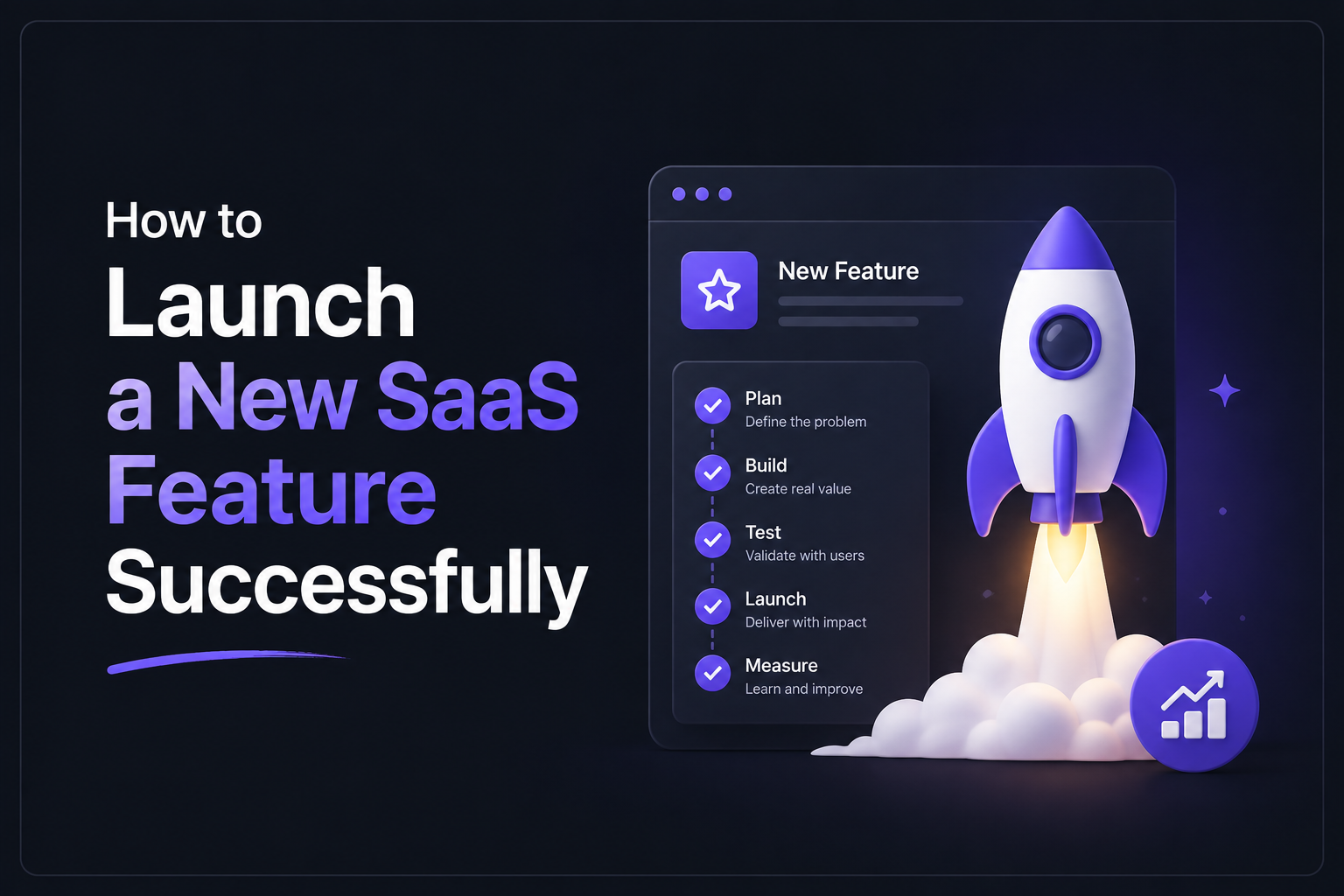
Build something valuable → communicate its value → help customers try it → measure adoption → improve it.
That's the foundation of a successful SaaS feature launch.
Why SaaS Feature Launches Fail
A feature can be well-designed, technically reliable, and genuinely useful yet still fail to gain traction.
The problem is often not the feature itself. It's what happens around the feature.
Customers need to discover it, understand its value, know how to use it, and have a reason to make it part of their workflow.
Here are some of the most common reasons SaaS feature launches fail.
Customers Don't Know the Feature Exists
This is one of the simplest problems to fix.
If you release a feature without telling customers about it, you're relying on them to discover it on their own.
Most won't.
Customers aren't constantly exploring every part of your application. They're usually focused on completing a specific task.
That's why important features should be communicated through channels such as:
Email
In-app announcements
A public changelog
Release notes
Documentation
Social media
The more important the feature, the more intentional your communication should be.
The Announcement Focuses on What You Built
A common mistake is writing feature announcements from the company's perspective.
For example:
"We've added advanced filtering with support for 12 new filter conditions."
This tells customers what you built, but not why they should care.
A stronger message focuses on the outcome:
"Find the projects you need faster with advanced filters for status, owner, priority, and more."
The second version connects the feature to a customer problem.
Customers care about outcomes, not your development process.
The Feature Is Difficult to Understand
Even when customers know a feature exists, they may not understand what it does or when they should use it.
Avoid vague announcements.
Explain:
What the feature does
What problem it solves
Who benefits from it
How to get started
The easier the feature is to understand, the easier it is to adopt.
There Is Too Much Friction
Customers may want to try a feature but abandon it because getting started requires too many steps.
For example, a new integration might require:
Finding the settings page
Creating an API key
Copying credentials
Configuring multiple options
Reading several pages of documentation
Every additional step creates another opportunity for customers to give up.
Look for ways to shorten the path from "I want to try this" to "I'm getting value from this."
The Launch Stops on Release Day
Another common mistake is treating launch day as the finish line.
You publish an announcement, send an email, and then move on to the next feature.
But customers don't all see your announcement at the same time.
Some won't open the email. Others won't need the feature immediately. Some may discover it weeks later.
Continue promoting important features through:
Tutorials
Documentation
Onboarding
Product updates
In-app messages
Customer conversations
A feature launch should continue beyond the day the feature goes live.
Nobody Measures Adoption
Without measuring what happens after launch, you won't know whether the feature actually succeeded.
Track metrics such as:
Number of customers using the feature
Feature adoption rate
Time to first use
Repeat usage
Customer feedback
Retention among users of the feature
These metrics help you understand whether customers are simply discovering the feature or actually getting value from it.
The Feature Doesn't Solve a Real Problem
Sometimes the launch strategy isn't the problem.
The feature itself simply isn't important enough to customers.
If you've communicated the feature clearly, made it easy to use, and promoted it consistently but adoption remains low, revisit the underlying problem.
Ask customers:
"What would make this feature more useful to you?"
Their answers can reveal whether you need better communication, a better user experience, or a different feature altogether.
The Real Goal of a Feature Launch
A successful launch isn't measured by how many people saw your announcement.
It's measured by whether the right customers discover the feature, use it, and get value from it.
That's why your launch strategy should continue well beyond deployment.
How to Launch a New SaaS Feature Successfully
A successful feature launch starts well before the feature reaches production.
You need to understand the problem, define what success looks like, prepare your communication, and create a path for customers to discover and use the feature.
Here's a practical step-by-step process.
1. Validate the Feature Before Building It
Don't start with the feature.
Start with the problem.
Before investing weeks of development time, make sure you're solving something customers actually care about.
Talk to existing customers, review support requests, analyze feature requests, and look for patterns in how people use your product.
Ask questions such as:
What problem are customers trying to solve?
How frequently does the problem occur?
How are they solving it today?
How much time or effort does the current solution require?
Would solving this problem change how they use your product?
If several customers are experiencing the same problem, you have a stronger reason to build the feature.
This also makes the eventual launch easier because you already understand the problem you're communicating.
2. Define Your Launch Goal
Before launching, decide what you want the launch to accomplish.
Your goal shouldn't simply be:
"Get people to know about the feature."
Make it measurable.
For example:
30% of eligible customers try the feature within 30 days.
100 customers activate the new integration.
20% of active users adopt the new workflow.
Existing customers use the feature at least once per week.
Your goal will determine what you communicate and which metrics you track after launch.
3. Identify the Customers Who Need It
Not every feature is relevant to every customer.
A new API feature might be valuable to developers but irrelevant to non-technical users.
A team collaboration feature might be important for larger accounts but unnecessary for individual users.
Identify your target audience before writing your announcement.
Consider:
Customer segment
Plan
Role
Product usage
Industry
Existing feature usage
Targeted communication is usually more effective than sending the same message to everyone.
4. Prepare Your Feature for Launch
Don't wait until launch day to discover that customers don't know how to use the feature.
Before releasing it, make sure the experience is ready.
Prepare:
Onboarding
Documentation
Help articles
Tooltips
Examples
Demo videos, when appropriate
In-app guidance
Your customers should be able to move from discovering the feature to using it with as little friction as possible.
5. Create Your Launch Messaging
Your announcement should answer three basic questions:
What is new?
Explain the feature clearly.
Why does it matter?
Explain the customer problem it solves.
What should I do next?
Give customers an obvious next step.
For example:
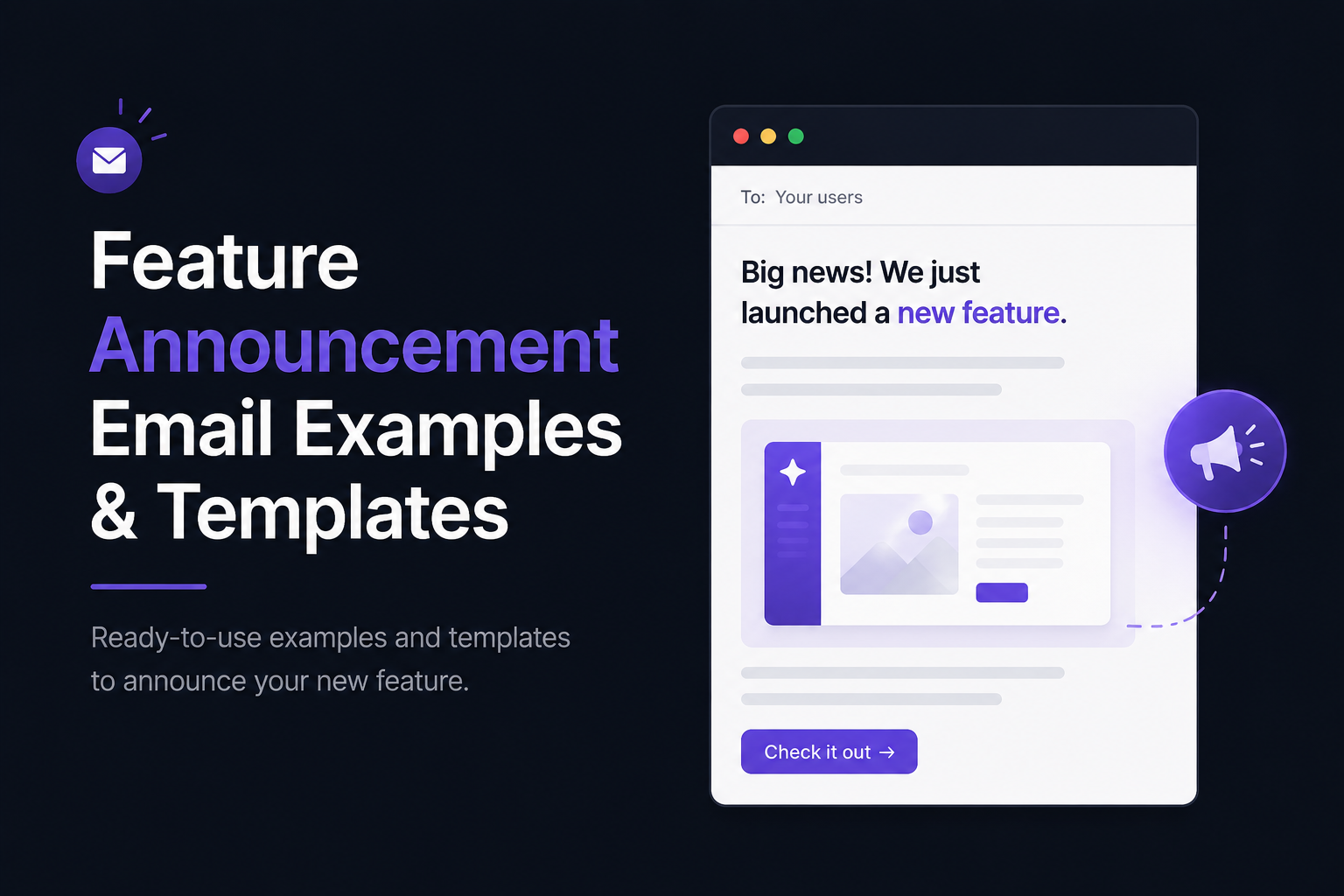
Introducing automated release notes
You can now connect GitHub or Linear and automatically turn development activity into customer-friendly release notes.
Connect your account and create your first automated update.
Notice that the message doesn't focus on how the feature was built.
It focuses on what customers can accomplish with it.
6. Prepare Your Documentation and Onboarding
Your announcement gets customers interested.
Your onboarding helps them succeed.
Make sure customers have somewhere to go when they want to learn more.
Depending on the feature, this could include:
A quick-start guide
Documentation
A product tour
An interactive walkthrough
Example use cases
Frequently asked questions
For complex features, consider creating multiple levels of education.
Start with a simple explanation, then provide detailed documentation for customers who need it.
7. Announce the Feature
Now it's time to put the feature in front of customers.
Use the channels that make sense for your audience.
For example:
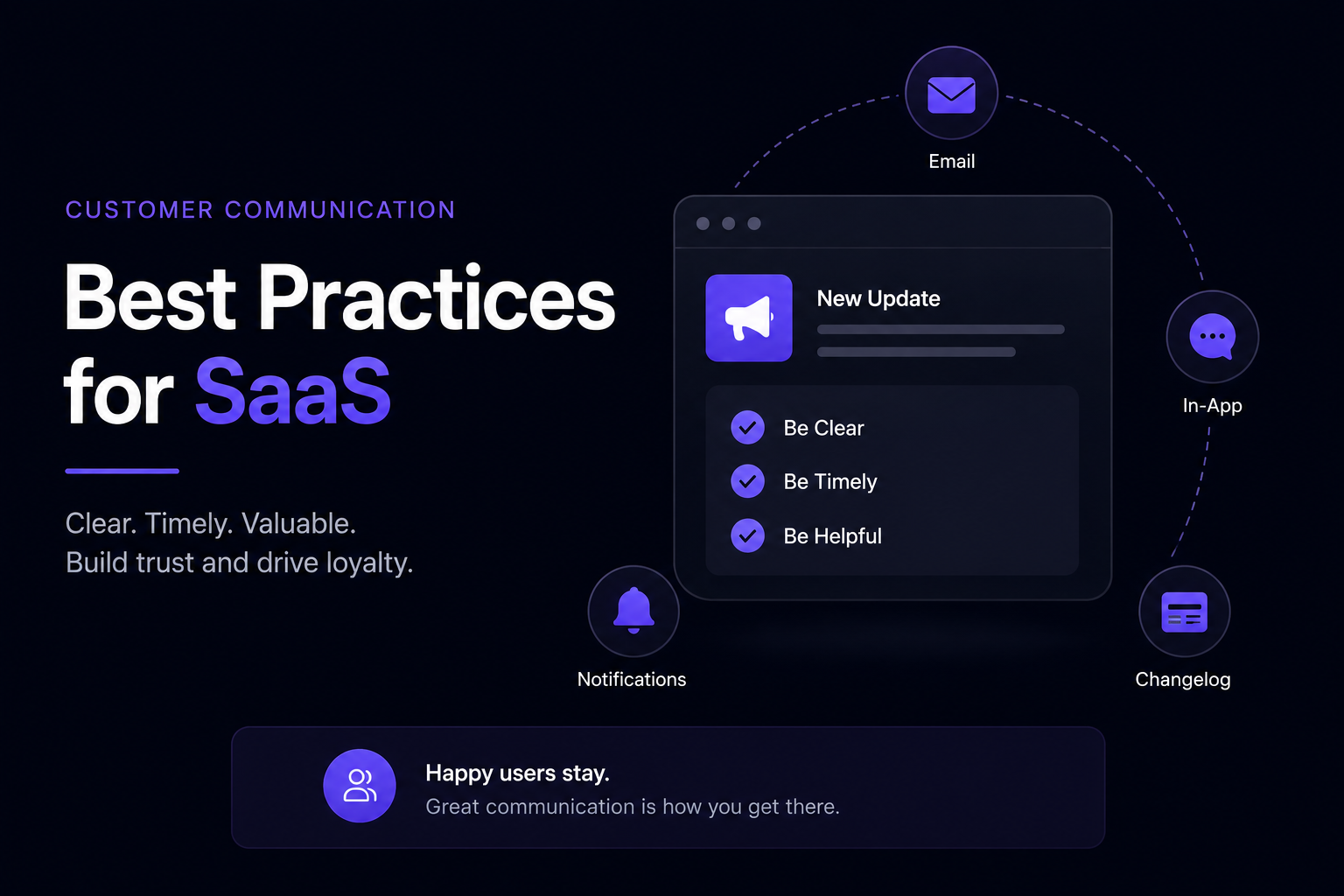
Email: For important announcements
In-app announcements: For active users
Changelog: For a permanent product update
Blog: For major features that deserve a detailed explanation
Social media: For broader awareness
Customer calls: For high-value accounts
You don't need to use every channel for every launch.
The size and importance of the feature should determine how much communication it receives.
8. Promote the Feature After Launch
Don't assume everyone will use the feature immediately.
Some customers will miss your announcement.
Others may see it but not need the feature at that moment.
Continue promoting important features after launch through:
Product updates
Tutorials
Onboarding
Documentation
In-app messages
Customer newsletters
Social media
This is particularly important for features that require customers to change an existing habit.
Repeated exposure gives customers more opportunities to discover the feature when they're ready to use it.
9. Measure Feature Adoption
Once the feature is live, start measuring what happens.
Look beyond announcement metrics such as opens and clicks.
Track actual product behavior.
Useful metrics include:
Feature adoption rate
Number of active users
Time to first use
Repeat usage
Usage frequency
Conversion or upgrade rate
Customer retention
For example, if 5,000 customers received your announcement but only 50 actually used the feature, the launch may have generated awareness without generating adoption.
That's an important distinction.
10. Collect Feedback and Iterate
The launch doesn't end when you've collected your first metrics.
Talk to customers who adopted the feature and customers who didn't.
Ask:
Was the feature easy to understand?
Was it easy to find?
Did it solve the problem you expected?
What prevented you from using it?
What would make it more useful?
Use this feedback to improve the feature, onboarding, and communication.
Sometimes the problem isn't that customers don't want the feature.
They simply don't understand how to get value from it.
A Feature Launch Is a Process, Not an Event
The best SaaS feature launches don't happen on a single day.
Following this process gives your feature a much better chance of reaching the customers it was built for and becoming part of their regular workflow.
SaaS Feature Launch Checklist
A checklist makes it easier to avoid forgetting important parts of a feature launch.
Use the following checklist before, during, and after releasing a new SaaS feature.
Before the Launch
Validate the customer problem
Confirm there is demand for the feature
Define the target customers
Define your launch goal
Decide which metrics you'll track
Test the feature with real users
Fix major usability issues
Prepare documentation
Prepare onboarding or in-app guidance
Create screenshots or product visuals
Write the feature announcement
Prepare the changelog entry
Prepare the email announcement
Decide which customers should receive the announcement
On Launch Day
Release the feature
Verify everything works in production
Publish the changelog entry
Send the announcement email
Publish an in-app announcement if appropriate
Update documentation
Share the feature on relevant social channels
Monitor errors and customer feedback
Watch early usage
After the Launch
Track feature adoption
Monitor repeat usage
Review customer feedback
Identify friction points
Follow up with customers who haven't adopted the feature
Publish tutorials or examples if necessary
Continue promoting the feature
Improve onboarding based on feedback
Review your launch metrics
Document what worked and what didn't
Turn the Checklist Into a Repeatable Process
You don't need to reinvent your launch process every time you build something new.
Create a standard feature launch checklist for your team and reuse it for every meaningful release.
Over time, you'll learn which channels generate the most adoption, which messages perform best, and where customers typically get stuck.
Your feature launches will become more predictable—and your team will spend less time figuring out what to do at the last minute.
Common SaaS Feature Launch Mistakes
Even with a launch checklist, it's easy to make mistakes that limit adoption.
Here are some of the most common ones to watch for.
1. Launching Without Validating Demand
Building a feature based on assumptions can lead to low adoption from the beginning.
Before investing heavily in development, talk to customers and look for evidence that the problem is worth solving.
2. Announcing the Feature Too Late
Don't wait until the feature is live to start thinking about communication.
Prepare your messaging, documentation, screenshots, and onboarding before launch day.
This gives you time to make the launch experience clear and consistent.
3. Focusing on the Feature Instead of the Problem
Customers don't care how many engineering hours went into building something.
They care about what it helps them accomplish.
Lead with the problem and outcome rather than technical details.
4. Sending the Same Announcement to Everyone
A feature that's highly relevant to one customer segment may be completely irrelevant to another.
Whenever possible, segment your audience and communicate with customers who are most likely to benefit.
5. Relying on a Single Channel
A single email isn't a complete launch strategy.
Customers can miss emails, ignore social posts, or simply not log in when your announcement appears.
Use a combination of channels appropriate for the importance of the feature.
6. Treating Launch Day as the End
Publishing an announcement doesn't mean customers will immediately adopt the feature.
Continue educating customers through tutorials, onboarding, documentation, and follow-up communication.
7. Measuring Awareness Instead of Adoption
Open rates and clicks can tell you whether people interacted with your announcement.
They don't tell you whether customers actually benefited from the feature.
Track product usage and repeat adoption as well.
8. Ignoring Customers Who Don't Adopt
Low adoption is a signal worth investigating.
Don't immediately assume the feature isn't useful.
Find out whether customers:
Didn't know about it
Didn't understand it
Couldn't find it
Found it difficult to use
Didn't have a need for it
The answer can reveal exactly what needs to change.
9. Overhyping the Launch
Calling every release "revolutionary" can make your product communication feel less credible.
Be specific.
Explain what changed, who it's for, and what customers can accomplish with it.
Clear messaging builds more trust than exaggerated claims.
10. Moving On Too Quickly
After launching a feature, it's tempting to immediately start building the next one.
But the post-launch period is where you learn whether your assumptions were correct.
Give the feature enough time to generate usage data and customer feedback before deciding whether it was successful.
The Best Launches Are Customer-Centered
A successful feature launch isn't about creating the biggest announcement.
It's about removing the barriers between customers and the value your feature provides.
If customers understand the problem, see the benefit, know how to get started, and receive enough support after launch, they're much more likely to adopt the feature.
Frequently Asked Questions
How long should a SaaS feature launch take?
There is no fixed timeline. A small feature might need only a few days of launch preparation, while a major feature may require several weeks.
The important thing is to prepare the communication, onboarding, documentation, and measurement strategy before the feature goes live.
When should I announce a new SaaS feature?
For most features, announce them when they're ready for customers to use.
For major launches, you can also create anticipation before release through teasers, waitlists, beta access, or early announcements.
Avoid promoting a feature too early if customers won't be able to use it for a long time.
Should I announce every new feature?
No.
Major features, customer-requested improvements, new integrations, and changes that provide significant value usually deserve an announcement.
Minor bug fixes and small interface changes can usually be documented in your changelog instead.
What channels should I use to launch a SaaS feature?
The right channels depend on your audience and the importance of the feature.
Common channels include:
Email
In-app announcements
Public changelog
Product documentation
Blog posts
Social media
Customer newsletters
Direct customer communication
For major launches, using multiple channels can help maximize awareness and adoption.
How do I measure whether a feature launch was successful?
Don't rely only on email opens, clicks, or social media impressions.
Measure what happens inside your product.
Useful metrics include:
Feature adoption rate
Number of users who try the feature
Time to first use
Repeat usage
Usage frequency
Customer retention
Conversion or upgrade rate
The right metric depends on what you wanted the feature to accomplish.
What is the difference between a feature launch and a product launch?
A feature launch introduces a new capability within an existing SaaS product.
A product launch typically introduces an entirely new product or major product offering.
Feature launches usually involve an existing customer base, making adoption and customer communication especially important.
How can I increase feature adoption after launch?
Start by making the feature easy to discover and understand.
Use in-app announcements, onboarding, documentation, tutorials, and follow-up communication to help customers get started.
Then monitor usage and speak with customers who aren't adopting the feature to understand what's preventing them from using it.
Should I use a changelog when launching a new feature?
Yes.
A changelog provides a permanent place to document what changed and gives customers somewhere to learn more after seeing your announcement.
For major features, you can combine a changelog with email and in-app announcements.
How do I launch a feature with a small marketing budget?
You don't need a large marketing budget to launch a SaaS feature effectively.
Start with channels you already own:
Your customer email list
Your changelog
Your website
In-app announcements
Social media
Existing customer relationships
A clear message explaining the customer problem and the value of the feature can be more effective than an expensive campaign.
What should a SaaS feature announcement include?
A strong feature announcement should explain:
What's new
Why it matters
Who it's for
How to use it
What to do next
Keep the message focused on customer outcomes rather than technical implementation details.
Conclusion
Launching a new SaaS feature successfully takes more than pushing code to production.
You need to make sure you're solving a real customer problem, communicate the value clearly, help customers get started, and continue supporting the feature after launch.
Don't judge your launch only by how many people saw your announcement.
The real measure of success is whether the right customers discover the feature, use it, and get meaningful value from it.
And remember: launch day isn't the finish line.
Some customers will adopt your feature immediately. Others will need more education, better onboarding, or a reason to try it. Continue listening to customers and improving the experience based on what you learn.
Make Every Feature Launch Easier
Announcify helps SaaS teams communicate product updates and new features without adding more work to the launch process.
Create a public changelog, announce features with an in-app changelog widget, generate customer-friendly release notes with AI, and connect tools like GitHub and Linear to keep your product updates flowing automatically.
Instead of shipping a feature and hoping customers discover it, give them a clear way to see what's new and understand why it matters.
Build great features. Launch them properly. Help customers get value from them.
Ahmed Errami
I'm a full stack developer who is passionate about building products that help people. I'm also the founder of Announcify.
Product Updates
Sep 5, 20268 min read
Best AI Release Notes Generators
Manually writing release notes after every deployment takes time. Here are the best AI release notes generators for turning your development workflow into clear, customer-friendly product updates.
 Ahmed Errami