How to Build Customer Trust Through Product Updates | Announcify
Customer Communication6 min read
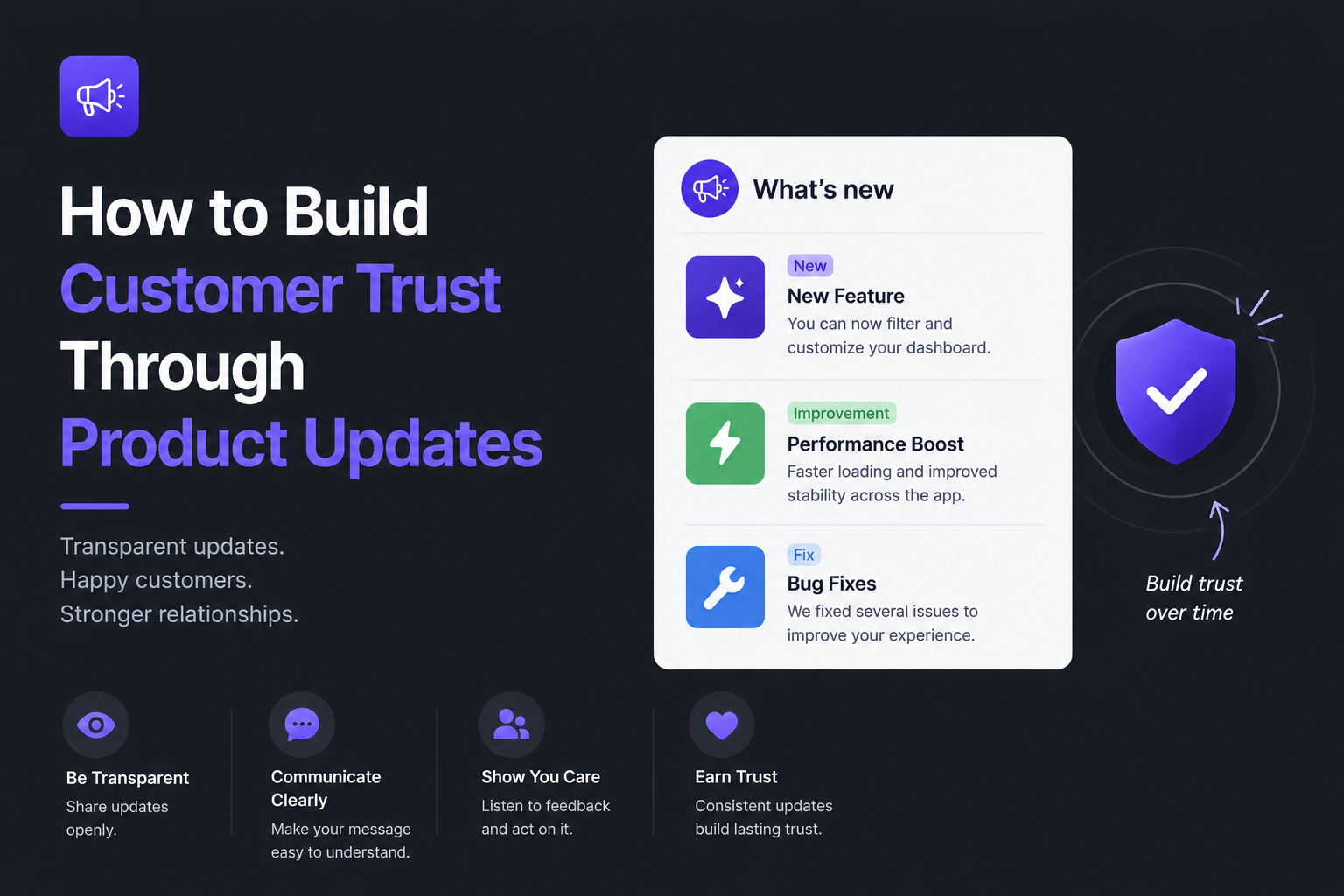
How to Build Customer Trust Through Product Updates
Aug 4, 2026
Ahmed Errami
Introduction
Trust is one of the most valuable assets a SaaS company can earn.
Customers trust you with their data, rely on your product for their daily work, and expect it to keep improving over time. That trust isn't built overnight, and it isn't earned through marketing alone.
It's built through consistent actions.
One of the simplest ways to strengthen customer trust is by communicating your progress.
When customers regularly see new features, improvements, and bug fixes, they gain confidence that your product is actively maintained and that your team is committed to making it better. Even small updates can reassure users that you're listening to feedback and investing in the product they depend on.
The opposite is also true.
If customers never hear from you, they may assume development has slowed down—even if you're shipping new features every week. A lack of communication creates uncertainty, and uncertainty makes it harder for customers to trust your product in the long run.
That's why product updates matter.
They don't just announce what's new. They demonstrate transparency, reinforce your commitment to customers, and show that your product continues to evolve.
In this guide, you'll learn how product updates help build customer trust, why transparency matters for SaaS companies, and practical ways to communicate product improvements without overwhelming your users.
They expect a product that's continuously improving—and a team that's willing to show it.
Why Customer Trust Matters in SaaS
Trust influences almost every decision a customer makes.
It affects whether someone signs up for your product, upgrades to a paid plan, recommends you to others, or renews their subscription.
Unlike traditional software, SaaS is an ongoing relationship. Customers aren't making a one-time purchase—they're choosing to continue paying for your product every month or every year.
That means trust has to be earned continuously.
Trust Reduces Churn
Customers are more likely to stay with a product they believe is actively improving.
Even if a competitor launches a similar feature, users are less likely to switch when they trust that your team is responsive, listens to feedback, and continues investing in the product.
Consistent communication reinforces that confidence.
Trust Increases Product Adoption
People are more willing to explore new features when they trust the company behind them.
If customers regularly receive clear, helpful product updates, they're more likely to try what's new because they know what to expect and understand how each improvement benefits them.
The result is higher feature adoption and greater engagement.
Trust Makes Pricing Easier to Justify
Every SaaS company eventually raises prices or introduces new plans.
Customers are far more accepting of these changes when they can clearly see that the product continues to improve.
A history of regular product updates shows that their subscription is funding ongoing development rather than simply maintaining the status quo.
Trust Turns Customers into Advocates
Satisfied customers often become your best marketing channel.
They recommend your product to colleagues, mention it on social media, and leave positive reviews because they believe in what you're building.
Transparent communication strengthens that relationship.
When customers feel included in your product's journey, they're more likely to support it and share it with others.
Trust Is Built Through Consistency
Many founders think trust comes from shipping one groundbreaking feature.
In reality, trust is usually built through dozens of small moments.
Every bug you fix.
Every improvement you announce.
Every feature you release.
Every promise you keep.
Over time, these moments create confidence that your product is reliable and that your team is committed to making it better.
That's why product updates matter so much.
They're not just a record of what you've shipped, they're proof that your product is moving forward.
How Product Updates Build Trust
Every product update is an opportunity to strengthen your relationship with customers.
When updates are consistent, transparent, and customer-focused, they send a clear message:
"We're actively improving the product, and we want you to know about it."
Here are five ways product updates help build trust.
They Show Your Product Is Actively Maintained
One of the biggest concerns customers have when choosing SaaS software is whether the product will continue to improve.
If your changelog hasn't been updated in months, people may assume development has slowed down—even if your team is busy behind the scenes.
Regular product updates show that your product is alive.
Whether you're shipping major features or small usability improvements, consistent communication reassures customers that you're continuously investing in the product.
They Show That You Listen to Customer Feedback
Customers want to know their feedback matters.
When an update mentions that a feature was inspired by user requests or solves a commonly reported problem, it demonstrates that you're listening.
For example, instead of simply announcing a new feature, you could write:
"Many customers asked for a faster way to organize projects, so we've introduced custom labels."
This small detail helps customers feel like they're helping shape the product.
They Reduce Uncertainty
Silence creates questions.
Is the product still being maintained?
Are reported bugs being fixed?
Is the roadmap moving forward?
Regular updates answer these questions without customers having to ask.
Even if a release is relatively small, it reinforces the idea that progress is being made.
They Make Customers Feel Included
People enjoy being part of something that's evolving.
When you regularly share new features, improvements, and the thinking behind your decisions, customers feel connected to your product's journey.
Instead of feeling like passive subscribers, they become active participants who understand where the product is heading.
That sense of inclusion strengthens long-term loyalty.
They Create Accountability
Publishing product updates publicly creates a transparent record of your progress.
Customers can see what you've shipped, how frequently you release improvements, and how your product has evolved over time.
This level of transparency builds credibility.
It shows you're willing to stand behind your work and communicate openly about the direction of your product.
Trust Comes From What Customers See
Customers can't see your sprint planning sessions, code reviews, or late nights fixing bugs.
They only see what you choose to share.
That's why communicating your progress is just as important as making progress.
When customers consistently see meaningful improvements, thoughtful communication, and evidence that their feedback is valued, trust grows naturally.
You don't build trust by saying your product is improving.
You build it by showing that it is.
7 Best Practices for Building Trust Through Product Updates
Building trust doesn't require long announcements or daily emails.
It comes from communicating consistently, honestly, and with your customers' needs in mind.
Here are seven practices that help strengthen trust over time.
1. Be Consistent
Customers shouldn't have to wonder whether your product is still being maintained.
You don't need to publish updates every week, but you should communicate regularly whenever you've shipped something meaningful.
Consistent updates show that your product is actively evolving and that your team is committed to improving it.
A product that communicates progress feels far more reliable than one that stays silent for months.
2. Explain Why the Update Matters
Don't assume customers will immediately understand the value of a new feature.
Instead of simply describing what changed, explain the problem it solves and how it improves their workflow.
Compare these examples:
Less effective
Added custom notification settings.
More effective
You can now customize which notifications you receive, helping you stay informed without unnecessary distractions.
The second version focuses on the outcome rather than the feature itself.
3. Be Honest About Improvements
Not every release needs to be a major feature launch.
Customers appreciate honesty.
If an update is primarily about bug fixes, performance improvements, or reliability, say so.
These improvements may not generate headlines, but they demonstrate that you're investing in the quality of the product.
Transparency builds far more trust than trying to make every update sound revolutionary.
4. Acknowledge Customer Feedback
When customer feedback influences your product, let people know.
Simple phrases like:
"Based on customer feedback..."
"This was one of our most requested features..."
"Many users asked for a simpler workflow..."
show customers that you're listening.
People are more likely to continue sharing ideas when they see that those ideas lead to real improvements.
5. Keep a Public History of Your Progress
A public changelog does more than document releases.
It shows customers that your product has a history of continuous improvement.
Someone evaluating your product can quickly see:
How often you ship updates
What types of improvements you make
Whether you're actively maintaining the product
That transparency builds confidence before they even become a customer.
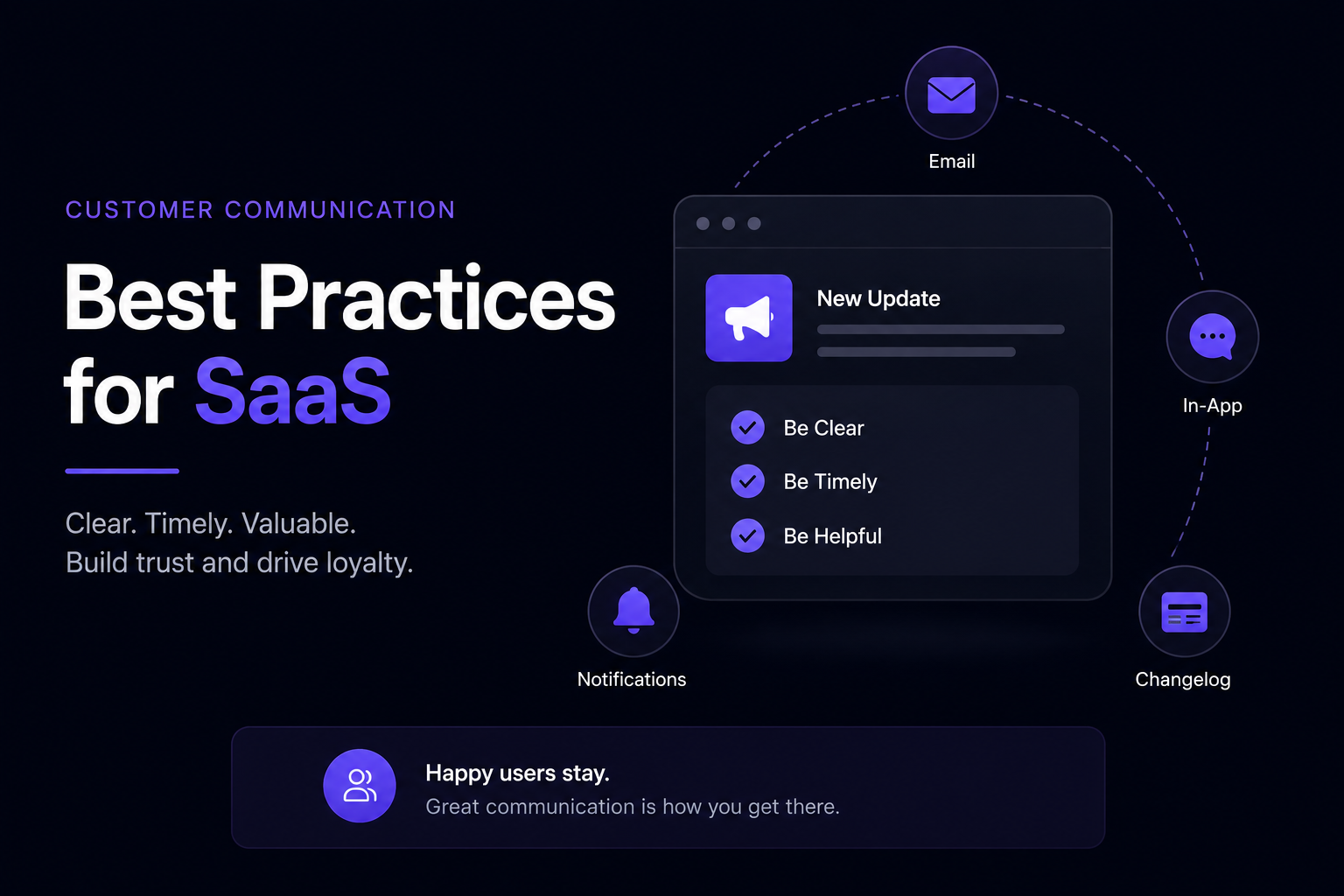
6. Communicate Through the Right Channels
Different updates deserve different levels of attention.
For example:
Major features can be announced through email, your changelog, and an in-app notification.
Smaller improvements may only need a changelog entry.
Bug fixes can often be grouped into a single update.
Using the appropriate channel keeps customers informed without overwhelming them.
7. Focus on Long-Term Relationships
Trust isn't built with a single announcement.
It's the result of hundreds of small interactions over time.
Every product update is another opportunity to show customers that you're improving the product, listening to feedback, and investing in their success.
Viewed individually, each update may seem small.
Viewed together, they tell the story of a product that's constantly moving forward.
Trust Is Earned One Update at a Time
Customers don't expect perfection.
They expect progress.
When you consistently communicate meaningful improvements, explain the value behind your decisions, and stay transparent about your product's evolution, you create confidence that lasts far beyond any individual feature release.
Over time, those small moments of communication become one of your biggest competitive advantages.
Because trust isn't built through promises.
It's built through proof.
Common Mistakes
Even teams that ship great products can unintentionally damage customer trust through poor communication.
The good news is that these mistakes are easy to avoid once you recognize them.
Only Communicating Big Wins
Some companies only publish updates when they launch a major feature.
Between those releases, customers hear nothing.
Long periods of silence can create the impression that development has slowed down, even when your team is shipping improvements every week.
You don't need to announce every small change, but you should communicate meaningful progress consistently.
Overselling Every Release
Not every update is "game-changing."
Using exaggerated language for routine improvements can make your announcements feel more like marketing than genuine communication.
Instead, be clear and honest about what changed and why it matters.
Customers appreciate authenticity far more than hype.
Ignoring Customer Feedback
Asking for feedback is only the first step.
If customers repeatedly submit suggestions and never see them acknowledged, they may stop believing their opinions matter.
When feedback influences a feature or improvement, mention it in your product update.
A simple note like, "This feature was one of our most requested improvements," shows customers that you're listening.
Writing for Your Team Instead of Your Customers
Many product updates describe technical work rather than customer value.
For example:
Refactored the permissions service.
Most customers won't know what that means.
Instead, explain the outcome:
Managing team permissions is now faster and easier, with fewer clicks required to assign roles.
Always write from the customer's perspective.
Disappearing After the Launch
Launching a feature shouldn't be the last time customers hear about it.
Many users miss announcements because they were busy, on vacation, or simply didn't open your email.
For important features, reinforce the message over time.
Mention them in future newsletters, highlight them in your in-app widget, or reference them in relevant blog posts.
Repetition—when done thoughtfully—helps customers discover features they might otherwise miss.
Trust Is Easy to Lose, Hard to Earn
Trust isn't built by a single announcement, and it isn't lost because of one missed update.
It's shaped by the overall experience customers have with your product.
When communication is transparent, consistent, and focused on helping users succeed, trust grows naturally.
When communication is inconsistent, overly promotional, or nonexistent, uncertainty takes its place.
The goal isn't to publish more updates.
It's to make every update another reason for customers to believe they're using the right product.
Frequently Asked Questions
Why are product updates important for building customer trust?
Product updates show customers that your product is actively maintained and continuously improving. They also demonstrate transparency by keeping users informed about new features, bug fixes, and improvements instead of leaving them wondering what's happening behind the scenes.
How often should I publish product updates?
There isn't a perfect schedule.
Publish updates whenever you've made changes that create meaningful value for customers. Some SaaS companies communicate weekly, while others publish updates every few weeks.
Consistency is more important than frequency.
Do customers actually read product updates?
Yes—when the updates are relevant and easy to understand.
Customers are much more likely to read announcements that explain:
What's new
Why it matters
How to get started
Long, technical announcements are far more likely to be ignored.
What's the best way to share product updates?
The most effective strategy is to use multiple communication channels.
For example:
Publish every meaningful update in your public changelog.
Highlight important features with an in-app changelog widget.
Send email announcements for major releases.
Share highlights on social media.
Publish blog posts for larger feature launches.
Each channel serves a different purpose, helping you reach customers without overwhelming them.
Can small updates help build trust?
Absolutely.
Trust isn't built only through major feature launches.
Small improvements, performance enhancements, and bug fixes show customers that you're continuously investing in the product. Over time, these incremental improvements demonstrate reliability and commitment.
Should I publish bug fixes?
Yes, especially when they solve problems that customers have experienced.
Instead of announcing every individual fix, group related improvements into a single update. This keeps customers informed without overwhelming them with minor changes.
What role does a public changelog play?
A public changelog creates a transparent history of your product.
It gives existing customers a central place to discover new features and reassures potential customers that your product is actively maintained. It also supports your SEO efforts by creating fresh, indexable content over time.
How can I make my product updates more trustworthy?
Focus on being clear, honest, and customer-focused.
Explain why an update matters, avoid exaggerated marketing language, acknowledge customer feedback when it's influenced a feature, and communicate consistently.
Trust grows when customers see steady progress—not when every release is presented as a breakthrough.
What's the best tool for publishing product updates?
The best tool depends on your team's workflow.
If you're looking for a simple way to publish a public changelog, announce new features inside your product, and automate release notes from GitHub and Linear, Announcify provides everything you need to keep customers informed while building long-term trust.
Conclusion
Customer trust isn't built through a single feature launch or a polished marketing campaign.
It's built through consistent communication over time.
Every product update is an opportunity to show customers that you're listening to feedback, improving the product, and investing in their success. Whether you're shipping a major feature, fixing a long-standing bug, or making everyday workflows smoother, communicating those improvements helps customers feel confident that they're using a product that's actively evolving.
The key is to be transparent, consistent, and customer-focused.
Instead of asking, "How can we promote this feature?" ask, "How does this help our customers?"
That small shift changes the way people perceive your product. Your updates become more than announcements—they become evidence that you're committed to delivering long-term value.
Remember:
Share meaningful updates consistently.
Explain the value behind every change.
Acknowledge customer feedback.
Keep a public record of your progress.
Communicate with honesty, not hype.
Trust isn't built by saying your product is great.
It's built by consistently showing customers that it keeps getting better.
Build Trust with Every Product Update
Announcify helps SaaS teams communicate product updates with clarity and transparency.
Publish a public changelog, announce new features through an in-app changelog widget, generate release notes with AI, and automatically turn GitHub and Linear activity into customer-friendly updates.
Instead of letting great work go unnoticed, give your customers a clear view of how your product is evolving.
Because every update is more than a feature announcement.
It's another opportunity to earn your customers' trust.
Ahmed Errami
I'm a full stack developer who is passionate about building products that help people. I'm also the founder of Announcify.
Product Updates
Sep 5, 20268 min read
Best AI Release Notes Generators
Manually writing release notes after every deployment takes time. Here are the best AI release notes generators for turning your development workflow into clear, customer-friendly product updates.
 Ahmed Errami